Sunday, July 29, 2007

July 29 – Getting There

This may be the last internet contact I have in a bit, since I’ve begun my travels to the clinic site in the village of Sanfe Bagar, Achham. Since the more interactive (and less administrative) part of my trip begins now, I suppose this requires some more background.

Nyaya Health was originally conceived of by Jason Andrews, a Yale undergraduate. Through all his college summers, he traveled to Nepal to do medical work in the Kathmandu valley, where he helped secure HIV/AIDS resources for IV drug users in the capital city. This vision followed him into med school (at Yale again) where he formally created the NGO. During his travels, he met Kathmandu-ite Roshani Dunghana, a young Nepali filmmaker. The two ended up getting married, and their confluence of interests (Jason for AIDS relief and Roshani for using film to progressive action) inspired them to travel to far western Nepal. There, the two saw the deplorable condition of health and development in general, exacerbated by the recently-ended Nepali civil war. Particularly depressing was the fact that the national government had constructed a 15-bed hospital in nearby Bayalpata, but the clinic was never staffed and never stocked. To this day, it is an abandoned building. Upon returning to Yale, Jason contacted two friends, Duncan Smith-Rohrberg Maru and Sanjay Basu, and the three decided to begin an effort to rectify the problem. Duncan and Jason traveled to Achham, one of the western districts, in May 2007 and while there decided to establish a PHCC (primary health care center) in the village of Sanfe Bagar. The Nepal Health Equity Initiative was born.

Currently, the clinic building, a non-inpatient facility, is undergoing renovation and outfitting to become a suitable health center. In addition, agreements are being finalized with domestic agencies, other NGOs, and the staff. Much of my work in Kathmandu has been managerial, and I’m now shifting gears and going to Sanfe with our prospective medical director, Dr. Bishnu Kattel.

Our travels at this point have taken us from the capital to the southwestern city of Dangadhi. The town is just 10km from the Indian border, and is in the heart of the Terai, a sweltering jungle. Apparently, the region used to be almost devoid of inhabitants due to malaria falciparum. (In fact, Dr. Bishnu tells me that when he was a child, the prevalence of malaria and leprosy was so great in the Terai that his parents would joke about how your finger would fall off if you even pointed towards the forest). The few people who did persist in the Terai, the Tharus, were considered magical since they enjoy some measure of immunity to the disease. Modern development of the area via swamp draining, DDT spraying, and aggressive prophylactic measures, however, has wiped out falciparum (though vivax still stubbornly remains) and the region is one of the fastest-growing districts in Nepal. The place is still a breeding ground for mosquitoes though, and last night alone I was bitten over twenty times— while wearing a blanket. I’m paranoid about these things, so I've been making sure to take my doxycycline prophylaxis. Interestingly, none of the Nepalese finds malaria at all worrying, and Dr. Bishnu actually rejected my offer of doxycycline (which is understandable, since the drug has some minor GI side effects). The only person who has shared my worries about malaria is Chris, and he's in Kathmandu, where malaria is not present.

As for the climate, it's more humid than anything I've ever encountered in my life. Merely standing is good enough to get you sticky, and life is an endless quest to stay cool. In addition, it stormed (rained by Dangadhian standards) last night, and now the streets are a sea of brown water.

Populationwise, Dangadhi is interesting due to its proximity to India. Whereas I could blend in easily with the Gurungs and Rais of northern Nepal, I stand out pretty clearly here, since the majority of people are darker. This leads to a fair amount of staring and pointing. For the first time since coming to the country, people have been approaching me and asking if I’m Chinese or Japanese. This is facilitated by the fact that most people travel slowly. Poorer and more rural than Kathmandu and Pokhara, Dangadhi is largely an unmotorized city, with no taxis and only the occasional motorbike. As such, our (and everyone's) main means of transportation is rickshaw. The town is small enough that rickshaws will get us anywhere in good time, though, and the open-air travel is strangely refreshing.

A highlight of the journey, however, was meeting up with Dr. Japath Thapa and his friends, Dr. Krishna and Dr. Patan. The trio of young doctors (all in their mid-twenties) has been working at Seti Zonal Hospital for the past few months following the completion of their internships. They are also alumni of Dr. Bishnu and Bijay. As such, they’ve really gone out of their way to take care of us, offering us food, lodging, and even Tuborg Strong (the 15-proof local beer). In our quest to find them, however, I was afforded a unique view of the “medical district” of Dangadhi.

Nepal’s state medical system is broken up into several tiers. At the very top are a few national hospitals largely affiliated with universities. Most are in urban areas. Below them are zonal hospitals, set up to service a collection of districts. The next level contains the district hospitals, which serve individual districts. Following them are primary health care centers, which function to varying levels of capacity in villages. Lastly, there are health posts, which are irregularly-staffed clinics run by HAs (Health Assistants) or ANMs (Auxiliary Nurse Midwives), not doctors.

Anyways, I’m out of time, since the jeep that will take us to Doti, the neighbor district of Achham, is here. There, we will most likely stay at the home of Dr. Prakash Thapa, who is working at Doti District Hospital and interview our clinic’s potential ANM. More to come.

Saturday, July 28, 2007

Oh

And before I forget, note that I've put up some of my photos on the link to the left. This isn't all of them, since I'm missing all Pokhara photos (which is a pity, since they're so gorgeous), as well as the most recent *ahem* steamy photos. They'll be up in due time, but do peruse what's already available.

July 28 – TANTRIC SEX!

No, I’m not kidding. That was today’s theme. Chris and I had been planning on biking down to Bhaktapur, a town 13km from Kathmandu valley for the past week. Alas, it rained today, so no bike. Nevertheless, we took a cab and did just fine. The appeal of Bhaktapur is that the city looks virtually the way it did pre-modernization. The town, already considered holy, was restored in the 1970s by a German development organization—on the condition that it remain largely untouched. As such, automated transportation (buses, cars, motorbikes) are not allowed within town limits, except for teachers, certain key businesses, and law-enforcement.

As the guidebook explained, the majority of the temples were constructed between the 14th and 17th centuries by the Newari people. The Newari are known for their eccentric sense of humor, and it definitely shows in their carvings. At first glance, all you see is gorgeously-intricate woodwork. A closer look, however, reveals a peculiarly literal interpretation of kama sutra. Their Pashupatinath temple, dedicated to Shiva, bears “the most obscene depictions of tantric sex found in Kathmandu valley.” Sure enough, the building’s struts had all sorts of… peculiar erotic artwork. Men and women are in all sorts of different positions (I won’t go into detail, check out my photos when I upload them), but the highlight was described in the guidebook as the beam where you “shouldn’t even ask what the midget with the bowl is doing.”

That being said, the next attraction, a Buddhist temple, had a sobering reminder of the result of such sexual excesses: depictions of Hell. The woodcarvings on this side of Shiva’s town had some pretty-painful looking images of divine wrath, including constriction by snake and tooth-pulling with a wrench.

Bhaktapur was still gorgeous, and we had the chance to see woodworkers making the city’s famous carvings (many of which had some more urbane images of kama sutra), as well as Nepal’s tallest shrine. We were also joined by an art student named Lama, who gave me a crash-course in Buddhism and showed me some incredible Tibetian paintings (some made entirely from 24-carat gold paint). The lack of vehicles and modern technology in the village make it feel as if time has stopped, and despite the massive amounts of rain we got, we enjoyed the trip immensely.

As all good things have to end, though, we needed to make an appointment. On our way out, however, we had one last chance to observe Newari creativity. One of the temples at the exit of Bhaktapur has all kinds of animals engaging in procreative acts on it. The most memorable of all, however, was “two elephants in the missionary position, their trunks entwined in ecstasy.”

“That's some kinky shi*,” said Chris.

I couldn’t agree more.

July 26 – This is for you, Nick Simons

Working in a developing country is interesting since you routinely encounter folks involved in a variety of development NGOs. We met today with Dr. Zimmerman (a *gasp* American) with the Nick Simons Institute. NSI is offering MD-GP (Medical Doctor-General Practitioner) scholarships for eligible MBBS doctors (Medical Bachelor/ Bachelor in Surgery). Though our current medical director is not interested, we hope this will be a sufficient incentive to attract future doctors to the Nyaya Health clinic. The problem with the program is that in the current Nepali system, a bachelor in medicine is usually sufficient to allow a doctor to enter the field. An MD-GP is nice, but unnecessary. In fact, most MD-GPs work in rural areas (with charitable intentions), since their additional training enables them to become proficient family doctors.

Anyways, you may ask “why a funny name like Nick Simons?”

The story gets interesting: According to Chris, Nick Simons was a wealthy young man who lacked a goal in life but enjoyed traveling to exotic places. During one such visit, he was trekking through rural Nepal. Somehow, something he saw here touched him so much that he decided to become a doctor and devote his life to serving the people of Nepal. Unfortunately, on the trip home, he stopped by in Indonesia, where he drowned while swimming in an atoll.

His parents, in his memory, decided to continue his work and have thus created the huge institute in Nepal to improve health in rural areas via MD-GP scholarships, nurse/midwife training, and improved clinical research methods.

With this in mind, Chris, Bibhav, and I went to the NSI offices—and were amazed. Though tucked away in a residential area, the NSI building is immaculate, A/Ced in every room, computer-enabled in every office (with wireless internet too!), and full of massive furniture. We actually joked with Dr. Z that we may consider working for him on account of the impressive setup. That aside, negotiations went well with NSI, and we’re well on track for signing a number of scholarships each year with the organization.

Upon leaving the building, Bibhav let us know that he had done his research. Apparently, Mr. Simons (father of the late Nick) is among the 60 wealthiest people in the world. NSI is actually just one part of the great charitable projects they’ve financed in this country. Patan Hospital’s birthing center (the model for all Nepali birthing centers and a fully-independent [no doctors] program that has seen only 2 technical complications out of the last 600 births) was built (and now being renovated) by a million-dollar gift from the Simonses. Sadly, the family has not been similarly blessed. Nick, the eldest, met his untimely end in Indonesia. The second son was killed in a car accident while riding his bike outside his home. The third son is apparently autistic. Though I haven’t had time to confirm these facts, they’re a grim, but encouraging reminder that philanthropy is an important and powerful factor in global development.

On a lighter note, Bibhav and I had pizza today. Chris is from Connecticut, so he remained a skeptical of Nepalese pizza-making, but I thought it was okay. Definitely no Peppe’s or even Papa John’s, but it was recognizable as pizza.

Wednesday, July 25, 2007

Power is the Problem, So We Go for Bananas

Chris and I woke up early today to get some business out of the way. After meeting with Mr. Dhungana to go over tax issues, we booked tickets for my flight with Dr. Kattel to Danghadi (the first stop on the way to Sanfe). The rest of the morning was spent doing research on a tricky issue with the clinic— power. Electricity is not consistent at all in Achham (Chris and Bibhav spent over a week sans energy during a blackout) so it’s absolutely critical we get a generator there. Alas, the 2.5kW diesel generator that we have in mind is nearly impossible to find. We took a list of procurement businesses off the web and went down them, calling everyone. I also took a hike through downtown Patan, stopping at every machine shop on the way back to the guest house. Ten phone calls and eight store visits later, we could sense a pattern: nobody carries diesel generators. Most stores seem to have petrol (gasoline) generators, though, so things are leaning closer to that end. There was a glimmer of hope for a moment, when Rajan called us to let us know that he had found a place—but they only sell larger industrial-grade generators.

In lieu of our disappointing morning, we met up with Bikram to go on the long-delayed sightseeing trip. First stop: Durbar. This square, bounded by the former palace of the royal family, was bursting with temples, buildings, and monuments. Particularly memorable was visiting the Kumari, a nine-year-old girl considered a living goddess (the only living Hindu deity). We weren’t allowed to take photos, but she did peek down from her window. “She doesn’t look very happy,” noted Chris.

“She does this every day for hours,” noted Bikram. “Who could be happy about that?”

Also worrying to the Kumari is the fact that her position is temporary: Upon the onset of menstruation, the reigning goddess is unceremoniously and literally thrown out on the streets. A new girl takes her place and the cycle begins again.

On the way out of Durbar Square, a little man solicited me to buy something from him. The plaza is bursting with peddlers, so I was prepared, but he presented an item I really wanted: a Gurkha knife (khukuri). The huge blades are traditionally made by the residents of the region by the same name and are symbols of Nepal. They also represent the Gurkha army. During the British wars of colonization, their defense of the Terai led to the two year Anglo-Nepali war. Despite the eventual defeat of the Nepalese, the English were so impressed by the Gurkha fighting force that they were regularly called upon in WWI and WWII to serve the queen. Their regiment ended up being awarded 13 Victoria Crosses, the highest British Military honor. In addition, Britain has designated one of its most feared dragoon units the Gurkha Battalion, despite the fact that there are no Gurkhas in it (and of which Prince Harry is a commanding officer). To this day, many Rai and Limbu men still have khukuris (which they always carried with them into war) tucked into their belts.

Anyways, back to this knife, it wasn’t as elaborate or decorated as most I see in gift shops, but when I pulled the sheath back, it had the stamp of the Ghorka Army, complete with a serial number. Needless to say, I made the peddler quite happy. If nothing else, it'll also make an impressive mango slicer for me in Achham ;)

Unfortunately, buying one item in Durbar makes you a salesman magnet. One man harassed me in an attempt to sell me a lock for almost 15 minutes as I repeatedly denied his attempt (not to mention he was asking 400 Rupees [$6+] for an inch-long trinket!). I had learned my lesson. From then on, I kept my mouth shut, letting the peddlers descend on Chris instead.

We stopped briefly for lunch, where I had a buffalo sandwich (buffalo are not considered sacred like cows here), and noted that it tasted just like beef, just a little tougher.

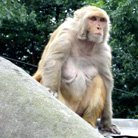
Our next visit was Pashupati, the holiest Hindu site in Nepal. Unfortunately, this meant it was so holy it prevented leather shoes, wallets, and belts (and their hapless non-Hindu owners) from entering. Nevertheless, Bikram wanted to show us the small village that had sprung up around it, and proceeded to buy a bunch of bananas. We quickly found out the reason, as he gave each of us one, bit one himself, then threw the rest into the street. A crowd of monkeys descended onto the pile, squeaking and scrambling for the fruity morsels. I hate to put it this way, but they were definitely among the most charming of the area’s attractions. The rest of the temple was blocked from our entrance, though we were allowed to photograph whatever we could see from outside. We hiked around the gate, though, and caught a glimpse of a gigantic golden bull in the midst of dozens of statues.

There was a funny smell in the air, so I asked Bikram what kind of incense they burned here.

“People.” He replied.

Apparently, the river that runs through the temple is considered holy like the Ganges, and many Nepalis are cremated here.

“Oh.”

Shifting gears in religion, we then took a local bus to the opposite end of Kathmandu to visit Swoyambu, Nepal’s most holy Buddhist site. The Buddhists were more accommodating, and after a rainy 15-minute hike, we made it to the monastery and stupa at the top of the hill. The temple, exploding with tiny statues, was incredible, and offered a stunning view of the entire capital city. We spent a bit of time meditating with the monks and listening to recordings of Nepali chants. To Chris’ amusement, Swoyambu was also overrun by monkeys. No bananas for them, though.

Note: In my haste to get this blog up, I forgot to enable commenting by non-google people. I've since unlocked it so anyone can comment, so feel free. I'll answer. (And thanks to Jordan and Ryan. Much love).
Tuesday, July 24, 2007

July 23, 2007 – Back to Work

We finally finished the somewhat murky process of taxes today with ace tax student Manoj. I admit we were a little befuddled by the circuitry of the system, but Manoj handled the work like a champ and promised us that all our tax woes would be complete by Thursday morning.

Later today, we also met with Dr. Bishnu Kattel, our prospective medical director and clinic doctor. Our insights:

- He’s articulate and intelligent. He was well-aware of the agreements prior to the meeting and got to the point about his thoughts right away.

- He’s very friendly. The meeting was really comfortable, and he actually apologized at one point for being too colloquial with us (which we didn’t mind at all). He said that since Bibhav and Bijay are colleagues and friends (he also personally knows many of the local doctors at Doti, Nepalgunj) he felt at ease with us all. Personally, I’m happy about this, since he’ll be my travel partner for a week.

- He seems dedicated. He’s gone through all the documents already and seemed set on signing. His application had some interesting personal insights about some of his experiences in resource-poor settings.

- He’s ready to travel to Achham. Since he recently returned to Nepal from the US, he’ll be taking the next 3-4 days to travel to Gorkha to visit his family, but wants to leave for Sanfe ASAP after that. Once there, we’ll meet with Sangita (our prospective ANM) and other staff, so we can start planning now.

Once Bibhav gets into town, we’ll meet and finalize everything. Our overall opinion of him was quite favorable and it seems the feeling is mutual.

July 22, 2007 – The Family is Wonderful. Mother Nature is not

The Acharyas have been so accommodating in opening up their home to us, and I’ve learned much about Nepali culture and family life from them. Bibhav’s parents are very religious (they’re members of Hare Krishna) so I’ve had a crash course in Hinduism. I can say that I’m now quite proficient at eating with my hands, and had the chance tonight to eat (okay, okay, so I didn’t eat it. I kinda licked it) what is called “Pepper that can set a hundred men’s mouths on fire.” Let’s just say I smelled it and my nose started hurting.

Bibhav’s parents’ religion prevented them from talking to us this morning (they’re in ritual prayer from 3:30AM-7AM), so Mr. and Mrs. Acharya “saw us off” last night. Bibhav walked us to the bus station at 6, though, and we parted until he arrives in Kathmandu to fly back to the States. I’m sure I’ll be seeing a lot of him back at Yale, though, which is awesome since he’s such a cool guy.

Mercilessly, the Himalayas remained hidden from view by huge clouds again. If anything, it was cloudier today than any of the other days we were in Pokhara. Thanks a lot, Nature.